Beginning-Sound Grocery Sort
Quick Activity Snapshot
- Age Range: Ages 4–5
- Prep Time: 8 minutes
- Skills: Beginning sounds and sorting
- Materials: Food packaging or toy food, Two baskets or bowls, Letter cards
Age ranges are suggestions, not developmental milestones or standards. Choose the setup for this child, and stop whenever needed.
Pretend groceries offer a useful reason to listen closely: each basket is getting a different kind of delivery. Instead of sorting foods by color, your preschooler will sort their names by beginning sound. Milk and melon can share a basket even though they look different; banana belongs somewhere else. This small shift makes a familiar shopping game feel surprising. Start with two sound groups and real objects the child can already name confidently.
Materials You’ll Need
- Food packaging or toy food
- Two baskets or bowls
- Letter cards
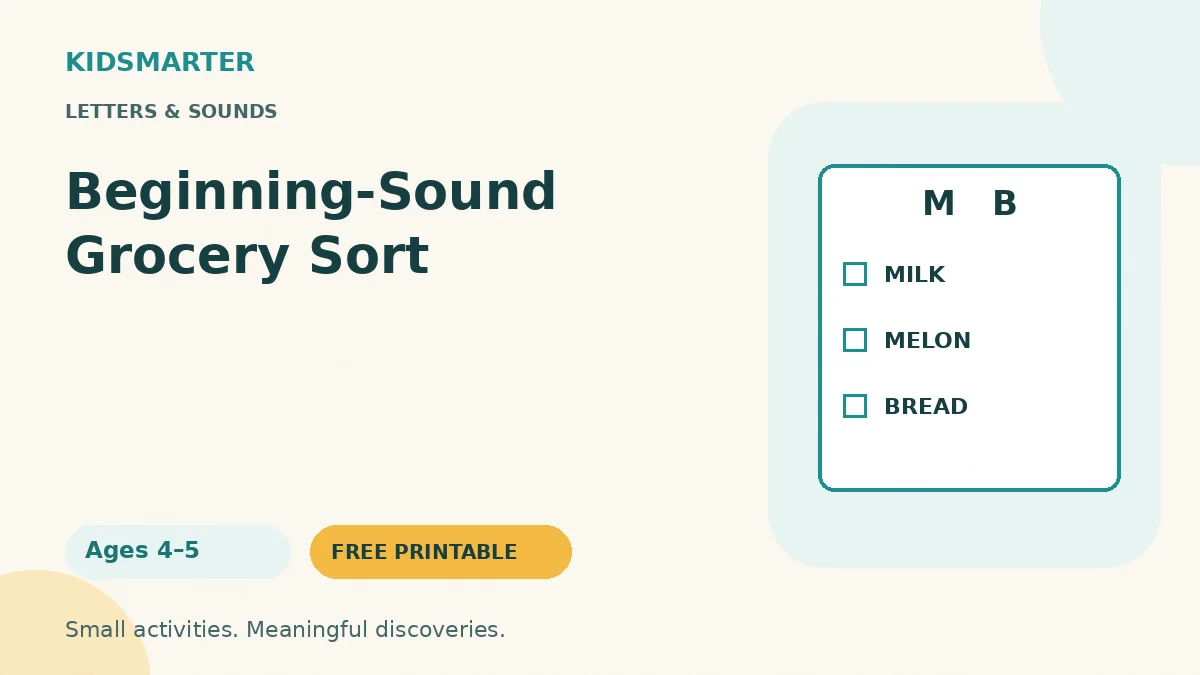
Collect two shallow baskets and empty, clean packaging or large toy foods for milk, melon, banana, and bread. The printable includes M and B sorting mats plus named food-picture cards if real items are unavailable. Choose one label for each picture before playing. Avoid ambiguous foods or brand names, and use unopened food only when it can remain safely on the table without spills.
Step-by-Step How to Play
-
Set out the M and B mats, one beside each basket. Name each target sound briefly: "/m/, as in milk; /b/, as in banana." Stretch /m/ gently but keep /b/ short. Show the letter only after saying the sound. Tell the child, "Today the baskets care about the first sound in the word, not what color the package is."
-
Place milk and a banana between the baskets. Say each name slowly without breaking every syllable into an exaggerated chant. Model listening to milk: "My lips start with /m/. Milk goes here." Invite the child to place banana. If they call it fruit, agree and then specify, "For this round we'll use its name, banana, so we can hear the beginning."
-
Add bread and melon one at a time. Ask, "Does bread begin like banana or milk?" Let the child repeat the words or simply listen to you. If a choice is uncertain, hold the two reference foods nearby and name all three again. Do not turn this into a letter-name quiz; the decision is about spoken sound even when a letter label is visible.
-
Become a delivery driver who makes one silly mistake, placing bread with milk. Invite your child to inspect the order: "My list says /b/ foods in this basket. Is everything ready?" Accept a correction with curiosity, not a dramatic buzzer sound. Ask the child to explain by saying the food names. They may demonstrate the correct placement without giving a verbal explanation.
-
Play shopkeeper and customer with the sorted stock. Request, "One /m/ food, please," and let the child select milk or melon. Then swap roles. Finish by returning real foods to storage promptly and placing dry cards in an envelope labeled with the two sounds. Repeat the same sound groups later with new objects such as a mug and a bowl before adding another group.
Why This Activity Helps
Beginning-sound sorting combines listening, vocabulary, and classification. The child holds a rule in mind while comparing a new word with familiar examples. Seeing the corresponding letters can gradually connect speech with print, but that connection should be explained, not assumed. English spelling has exceptions, so choose clear examples rather than words such as cheese for C or phone for P during an introductory round.
Easy Ways to Adapt by Age
Make It Easier: Use only milk and banana and let the child copy your placement. Put one reference object permanently on each mat. If naming pictures is hard, use actual packages and name them together before sorting. A child learning another language can play in that language instead, with new sound groups chosen to match the names they use.
Add a Challenge: Add three more clear examples, such as butter, beans, and a muffin, then ask the child to find a new item around the room. Let them reject an unrelated object rather than forcing every item into a basket. With a comfortable older preschooler, record a few starting letters on a shopping receipt without expecting conventional spelling.
Free Printable Included
Print this activity-specific pack on Letter paper. An adult prepares any cut pieces; use the activity directions above.
Parent Tip & Safety Note
Adults cut printable cards and remove packaging staples, sharp lids, and plastic film. Supervise children under three around all small pieces and keep the cards away from mouthing siblings. Do not use glass jars, raw meat packages, or medicines as pretend groceries. Praise a specific listening choice, such as noticing the start of melon, rather than calling a child smart or fast.