Crayon Texture Rubbings
Quick Activity Snapshot
- Age Range
- Ages 3–4
- Prep Time
- 5 minutes
- Skills Practiced
- Rubbing, noticing texture, and process art
- Materials
- Paper, a peeled crayon, and one large textured object
Age ranges are suggestions, not developmental milestones or standards. Choose the setup for this child, and stop whenever needed.
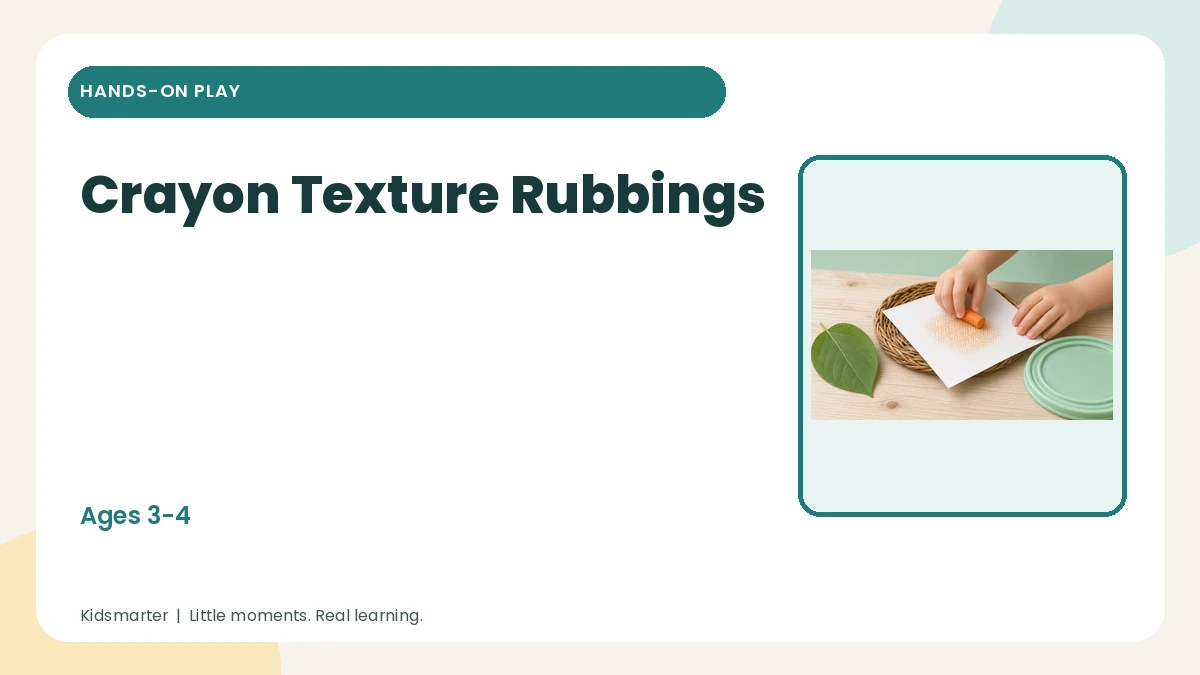
The side of a peeled crayon can pick up a texture that is hiding under the paper: the weave of a basket, the veins of a leaf, or the ridges of a large lid. There is no model to copy and no required picture. The job is to rub and see what appears.
Materials You’ll Need
- A sheet of paper
- One or two chunky crayons with the paper wrappers already removed by an adult
- One large, clean, textured object that cannot fit entirely in a child’s mouth, such as a woven basket, a ridged plastic lid, or the sole of a clean shoe
- Optional: a second large texture, such as a clean, non-spiny leaf you can identify as safe, and a small piece of tape to keep the paper from slipping
An adult peels the crayons before the child joins, because wrappers can tear into small bits. Do not use coins, beads, buttons, or other small objects as rubbing plates. If you are not sure a plant is safe to handle, skip the leaf and use a household texture instead. The child does not need scissors, paint, or glue.
Step-by-Step How to Play
-
Place the textured object on a table and lay the paper over it. A small piece of tape at one corner can keep the paper still. Show how to hold the crayon on its side, not on the tip, and make a short rub so a bit of the texture appears.
-
Invite your child to rub gently across the paper. Patches, scribbles, and a faint impression all count. Stay nearby, but do not take over the rubbing or require a complete, even print.
-
If they want another turn, move the paper or offer a second large texture. You may say words such as bumpy, ridged, or smooth if your child is interested. There is no sample to match and no need for the rubbing to look like a recognizable picture.
-
When they are finished, look at the paper together for a moment, then put the crayons away. One rubbing is enough. There is no required number of textures.
Small Details That Make This Activity Work
Hold the paper steady so the object does not skate away, and keep the crayon on its side so more of the texture can show. If the first object is too faint, try a more deeply textured basket or lid rather than pressing harder and harder. Avoid turning the activity into a copying job (“Make it look like this sample”). This is not a crayon-dot picture, not a torn-paper collage, and not a folding craft: the interesting part is the texture coming through the paper.
Why This Activity Helps
Open-ended art gives a child time to explore a material without a finished model to match. NAEYC’s family guidance on creativity and its article on process-focused art experiences distinguish this kind of exploration from product art, in which a child is asked to copy a sample. Those pages describe general support for process art; they do not evaluate crayon rubbings as a program, and a rubbing is not evidence of later writing skill, even though the work uses small hands. Children may enjoy the sensation of rubbing without talking about texture in words.
Easy Ways to Adapt by Age
Make It Simpler
Prepare one strongly textured object, tape the paper in place, and do the first few rubs together, hand over hand if your child likes that. You do not need a second texture, and you do not need to name the pattern.
Ready for a Challenge
Offer two textures on the same sheet and talk about how they feel or look different. Some children like to cut nothing, but to choose a favorite area and have you write a short label they dictate, such as basket or bumpy. Keep the label optional, and do not turn the page into a handwriting lesson.
Parent Tip & Safety Note
Stay at the table. An adult, not the child, peels the crayons and checks that objects are clean, large, and free of splinters or sharp edges. Do not use coins or other small parts, which can be choking hazards. Do not rub over electrical outlets, heaters, or anything hot or breakable. If you use a leaf, choose one you know is safe to touch, rinse it, and skip plants with thorns, sap that irritates skin, or an unknown identity. Keep crayon bits and tape away from younger siblings’ mouths. Stop if your child is finished, frustrated, or more interested in drawing freely than in rubbing a texture.
Explore more activities in this category or free printable games.
For the difference between open-ended process art and copying a finished sample, see NAEYC’s Supporting the Development of Creativity and Process Art Experiences. Those pages offer general guidance; they do not test this rubbing activity. For choking hazards if small objects are nearby, see HealthyChildren.org’s Choking Prevention for Babies & Children.